


The US and Israeli attacks on Iran began as we went to press, and will be, as you read this, over or merely beginning or all points between. The event marks a new acceleration point for the unravelling of the world order as we have known it.
Beneath the attacks and the chaos, caprice and internal conflicts of the Trump administration and the American Right, there have been messy long-term strategies. But deeper than all of that, the war contributes to a growing realisation of a near-unique danger for the human species. A conflict that has the potential to spiral towards nuclear exchanges, which will rapidly become unlimited.
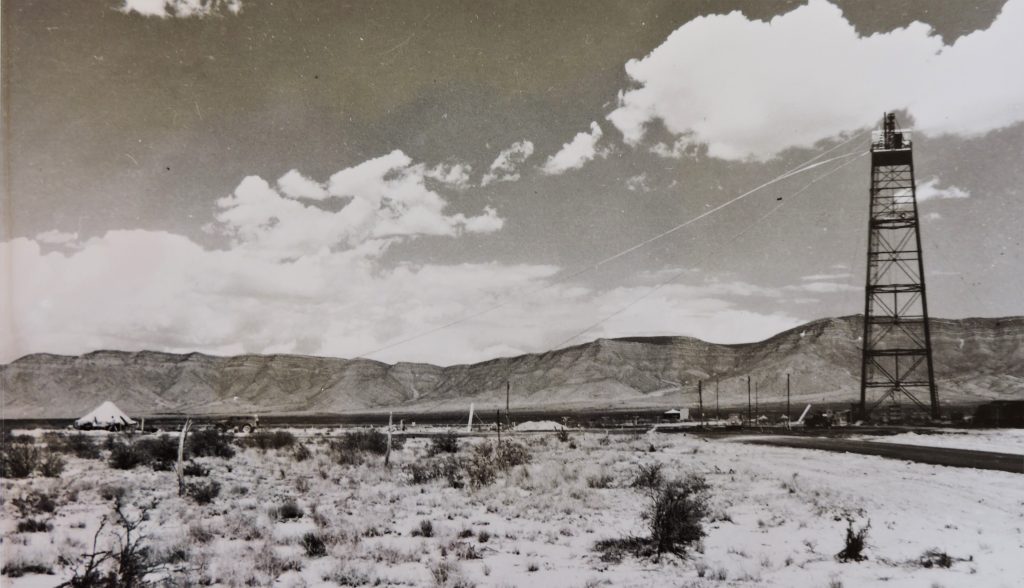
The lethality of the nuclear arsenals of the world has been with us since the middle of the twentieth century, and the inaugural test in the New Mexico desert, of the first A-bomb, the Gadget; the weapons systems that resulted were rapidly cyberneticised. Now, they are being fused with the galloping AI systems and technologies, which form the subject of this issue’s special section. Millions across the world with some orientation to ‘deep politics’, many of whom are reading this, will have had the same realisation in vague or specific terms. But it is a collective historical understanding being experienced individually. That is in part because the political institutions that could rapidly make it publicly collective are attenuated or compliant. In the 1940s, the ‘scientists movement’ sough to put nuclear arms under international control; in the 1950s, as H-bombs were rolled out, the Campaign for Nuclear Disarmament blossomed within networks of labour and left parties, universities and churches; in the 1980s, the new intensified Cold War prompted the ‘nuclear disarmament’ movement, supercharged by EP Thompson’s clear-eyed ‘exterminism’ paper, calling the Left to a struggle which could not be analysed within the existing Marxist framework. Nothing comparably collective has yet arisen in our era, in part because many of these institutions—universities, labour parties, science, the humanities, and much else—have been drawn into the smooth process of system reproduction in all its dimensions. Even the Greens, who might play a leadership role here, have lapsed into a contestatory politics that gets too bound up in legalism and small targets, unable to speak civilisationally in dissent to Labor, which is now a willing avatar of Thanatos.
The material atomisation of society through new media technologies and other changes has created a political atomisation in which an emergency response cannot, currently, reach a critical mass. For any rallying within that to occur, the true nature of the challenge will have to be collectively realised. Raising the alarm will not be sufficient. There will have to be a response in millions of souls, especially among those with some understanding of the process now underway.
There is abroad a melancholy that has crept into many areas of human affairs, and it arises not merely from a perception that much of humanity may be entering harder years. At the centre of this flattened adversarial process sits the capacity for everything to be ended by the tools we, as a species, have developed. In Silicon Valley, as we note in our special section on AI, this has supercharged a quasi-religious transhumanism that seeks transcendence from this world. In many humanist intellectuals, it has prompted a retreat to an uninvolved hedonism of ideas as they wait for the barbarians, or the darkness. Hedonism or the turn to religion has nothing ‘quasi’ about it.
The new system of death that is rapidly being assembled is an expression of what one might call the master process of human ‘civilisation’ at its most concrete and abstract levels: a tendency to take for granted the given frameworks of social life while abstracting from what it has meant to be human. In this case, the abstracted loyalties of ethnos and kin, embodied connection, that give the nation-state its power to command loyalty, combine with the assumption that endless layers of technological transformation can be added, while remaining in some sort of moral-rational control. The first two world wars showed the unlimited destructive power of such. The third may leave no one left to show it to.
There is no way now to live a meaningful political life—in its widest sense—than to contest the material and rhetorical claims to inevitability of this chaos-transcendence tension. This will only come from a greater self-understanding by society of the deep cultural forces driving destruction. As tall an order as that appears, sudden change may later come from it. Indeed, it may occur dialectically, in a sudden flip, in which the material networks that atomise us become a carrier of a renewed and much deeper notion of ‘extinction rebellion’—perhaps better, if less elegantly, put as a rebellion against humanicide. A tower has been built, its shadow over us, scorning life, love and hope. The only way it will be toppled is to stare back into the void it throws.
GR, for the Arena editors
Comments
“What is this life if, full of care,
We have no time to stand and stare.” WH Davies
Indeed, it is time to stare them down. Time for a mighty “Extension Rebellion” like no other, where millions or even billions suddenly realise that this is it. It’s Time. We are many. They are few. Wage our private and public rebellions. Do more locally: buy, grow, share, join, chat, make, remake, reuse, regain, innovate, reiterate, re-commune, rebel, speak truth, enjoy what you have, give stuff away, downsize lives, enjoy nature’s bounty, verge garden, care for the planet, care for people and share your excess, and live life.