


The biography of a leading Australian feminist activist makes visible the shifting values and subjectivities in the movement’s past half-century here.
In a beautifully crafted and evocative past episode of the ABC radio program ‘Encounter’, the resonant voice of Beatrice Faust opens with ‘I’ve got no problem with pornography, I love it!’ This was in 1994, and the other guests were four men: the presenter himself, a moral philosopher, a pioneer in the treatment of sex offenders and a well-known editor of a conservative political and cultural journal. While their comments included references to ‘our deeper being’, to Plato, to spiritual and moral harms, or to abusers and the degradation of women, Bea, as she was known, presented an explicit and instrumental list of various social uses of porn and her conviction that male sexuality was different to that of women. As she frequently noted, her own sexuality was an exception, being located more on the side of the male. This ‘encounter’ also stands as an audio record of her opposition to what she called ‘feminist illiberalism’, underscoring her belief that women did not need collective protection but just more individual agency and choice. Like many of her public interventions, she often placed herself in a different camp, one quite difficult to fit into the usual categories designating feminism, both then and now.
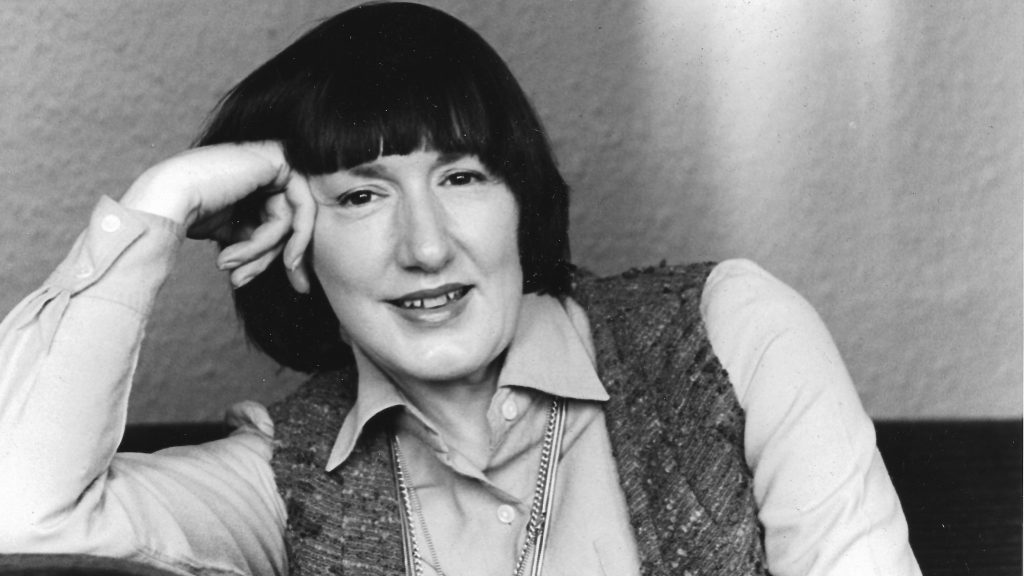
Beatrice Faust was born in Melbourne in 1939, and from the 1960s into the 1990s became a prominent voice and active campaigner for social change for women. Her influence in Australia as a leading thinker, writer and commentator about women’s liberation was perhaps second only to that of Germaine Greer. Unlike Greer, who left Australia, Faust was a fierce, controversial public figure during most of this period and had a singular presence in Melbourne. She gained early prominence as a fighter for abortion reform, at a time when abortion was illegal, dangerous and corruptly managed. She co-founded the Women’s Electoral Lobby in 1972 and became a widely published opinion writer, advocating for everything from rights that have become commonplace, to causes now wholly disowned, especially in the field of sexual politics. Highly influential, often through her oppositional views, her activism and writing have left less of a historical memory than that of others. The fact that she was both of her time and not of her time poses a challenge for any biographer. But this is particularly so for one like Judith Brett, who, in Fearless Beatrice, has an historical and cultural aim combined with a wish for younger women readers to engage with and learn about ‘the feminism and sexual politics they inherited’ (6). At the intersection of biography and memory, Brett locates herself as one of the beneficiaries of the changes that feminists like Faust actively brought into being. Brett herself remarks that she was drawn to writing this biography because it is a very Melbourne story, her own remembered world and town. Like the best of feminist biography, it succeeds in creating a juncture point where this world and other personal and public recollections of Faust and her legacy meet.

Judith Brett, Fearless Beatrice Faust: Sex, Feminism & Body Politics, Text Publishing, 2025
I view this as a ‘feminist biography’ because it brings to the fore questions about particular readings of key historical events, and naturalised oppositions in dominant feminist discourses. Brett refuses to reproduce the over-riding work-centred feminism that often prevails in accounts of the mid-late twentieth-century ‘second wave feminism’, but more attention could have been paid to the spaces between these dominant discourses. Yet, while this biography paints a vivid portrait of Faust and her strengths, frailties and contrarian politics, the dominance of liberal feminist reference points, legislative changes, electoral and policy battles, at times weakens Fearless Beatrice as social history. I will return to this point.
It would be an understatement to say that Faust, who seemed to pack many so many lives into one, is a complex and contradictory subject for any biographer to tackle. Brett does not shy away from this complexity, and she also resists ironing out the internal paradoxes and seemingly incongruous public positions that Faust adopted. Brett does not fall into the trap of writing a narrative with the aim of fabricating a personal coherence for Faust. This has been done by others where Faust is publicly commemorated for her role in establishing the Women’s Electoral Lobby in what was an election year in 1972, and for surveying candidates who, for the first time, were called to account for their views on various ‘women’s issues’. Before that, in 1964, she and a young lawyer formed the Victorian Council for Civil Liberties, with a sub-committee on abortion. Abortion law reform was one of the central focuses of Faust’s campaigning, and she is remembered for her pioneering role; as early as 1966 she had organised a teach-in on abortion at the University of Melbourne.
The chapter on abortion in Fearless Beatrice is one of the most powerful. Brett comments that many of the women she interviewed for this book spoke about abortion. The appalling details of the illegal abortions that women of Faust’s generation endured are familiar from literary works and film. Still, Brett manages to represent their experiences in a way that moves beyond the individual impact. She captures anew the cruelty, injustice and corruption of the time. There was also a very singular aspect to Faust’s commitment to abortion law reform, according to Brett, who traces Bea’s preoccupation with being a ‘motherless child’ (her mother died a few hours after she was born) and a more lethal identification with the signifier of being ‘unwanted’. These fixations seem to recur in Faust’s public pronouncements and in her more private writing. At one point, in explaining why she advocated for ‘abortion on request’, Faust quotes an unnamed, ‘wonderful child psychologist’: ‘If a woman dies in childbirth, they should knock the baby on the head’ (68). Surprisingly, Faust seems to read and reproduce this statement as somehow literal, not a metaphor for how important mothers are for babies to thrive but that babies without mothers are better off dead. This speaks to a highly complex relationship with motherhood.
In the spirit of the age, Faust was many things: a journalist, academic, public commentator, author of books, experimental filmmaker, actor, mother and sexual adventurer, publicly celebrating sexual pleasure and privately enjoying her many male lovers, advocating personal sexual agency over the constraints of monogamy or marriage. She was a film critic, book and photography reviewer for a range of newspapers. She stood as an independent candidate for the Federal seat of Flinders in 1974. Politically, she was a reformist, liberal, an opponent and critic of the revolutionary attitudes of the time, and a defender of paedophiles, a position Brett conveys with sensitivity and without any sensationalism. Brett’s biography directs our attention to the contradictions inherent in the different ways Faust managed or failed to manage some of these alignments and the tension between her more ‘private’ struggles and her public assertions. Bea represented herself as coming from a working-class and culturally impoverished background but ‘seemed peculiarly blind to class’, and showed no interest in the ‘class dimension of her life’s journey’ (49). Her voice was ‘without a hint of an Australian vowel or diphthong’ (86). She cultivated friends from Melbourne’s private school networks and a life of holiday houses and the finer things. Middle-class respectability was important to her. This kind of upward mobility was not in itself unusual, but I was struck by the disjunct between this class blindness at the very historical moment when socialist feminism emerged and flourished and radical feminists proposed that ‘women’ themselves constituted a class.
There is another paradox inherent in Faust’s relation to fear: her public outer fearlessness designated in Brett’s title, and her lifelong inner panic which led to a benzodiazepine addiction in the 1980s. This gives the title an ironic inflection. Faust traced her own symptomatic formations, which she named the ‘Fear and the Horrors’, back to her experience in her own mother’s ‘anxious womb’ (27). Her private suffering and ‘the self-doubt that gnawed at her’ (11) was recorded in diaries but rarely on public view. She tried various treatments for her inner suffering (stemming not only from her birth, but also the pain and hospitalisations she experienced as a result of various serious health conditions, including asthma). These treatments included yoga, primal therapy, transactional analysis, Transcendental Meditation and predictably, addiction.
Faust’s outer, public expression could be very fearless indeed. Brett deals at length not only with Faust’s commitment to advocacy of the legitimacy of desires around paedophilia, but with the biographer’s own difficulties with Faust’s intransigence on the matter. A case in point is Faust’s advocacy around paedophilia in her public media commentary and in her long friendship with and defence of Brian Elkner who was imprisoned in Ararat for the rape and assault of young girls. She ‘minimised his offences, describing them as “mild fetish assaults”’ (163). More broadly, where others saw crimes, including rape, Faust saw sex. Her views on rape were similarly out of kilter with the thinking of her time. Of ‘feminism’s preoccupation with rape’ Faust wrote to Elkner: ‘I have to force myself to see it the way feminine women do’ (161). The repression of sexual desire was the cause of society’s ills, according to Faust. Sex was the solution to problems of rape, paedophilia and pornography or a difficult labour and birth. She promoted understanding human sexuality in all its complexity and called for unrestrained ‘consensual’ enjoyment, unrestricted by laws, regulations and inhibitions. She seemed to universalise her own positive sexual openness and experiences, including a ‘thrilling relationship’ she had with a paedophile as a schoolgirl (32), as though this could be a prototype applicable to others. This may partially account for the blindness she had around the connection between consent and inequalities in power.
In keeping with her ethos around personal liberty and autonomy and her rejection of puritan crusades to control human sexuality which she described as the ‘last bastion of right-wing repressive morality’ (217), she places the burden of consensual sex on the shoulders of individual women. She had an abhorrence of ‘victim feminism’ or what she called ‘wimp feminists’ who were ‘aggressive sufferers’ caught in a cycle of ‘complain and blame’. Becoming a victim was a choice and an identity that women could and should reject, according to Bea. As Brett points out, she would have had little tolerance for the trigger warnings of today, nor in my view for what Katherine Angel calls ‘consent culture’ in Tomorrow Sex Will Be Good Again: Women and Desire in the Age of Consent (2021). Even though Faust despised the counterculture, her position is remarkably close to the countercultural directive, described and critiqued by Angel, that emancipation and liberation (in all areas) would inevitably follow once the truth about sex was told.
Faust’s explanation for her inner suffering—the ‘Fears and Horrors’—always centred on childhood trauma related to her own motherlessness. For someone with Faust’s intellectual and political bent, it seems puzzling that she did not write about the significant inequalities women faced once they became mothers, let alone record her own personal struggles and insights. If Faust didn’t write anything, this places her, at least in this respect, very much of her time. This period of the second wave of feminism was noisily in favour of women being economically productive, self-sufficient and liberal subjects, and proved relatively uninterested in making policy which accorded political value to the ideals and ethics associated with maternal care. This type of feminism celebrated being motherless, neither mothered by the mother they had rejected, nor by the state. Reproduction was questioned and discourses that linked women and children were repudiated.
Yet little is said in this biography about whether Bea, who was so intensely analytical, also interrogated her lived and contradictory experiences of being a mother to her only son, Stephen. As a lacunae in this biography, it risks placing Brett’s approach within the same dominating cultural framework as the period she is representing, naturalising an opposition between feminism and motherhood. Of course, this gap may be due to a lack of material in the archive or a caution on the biographer’s part to protect Bea’s son. We are given some detail on Faust’s life as a mother, but barely enough. We learn that Bea chose to become pregnant by a Finnish academic who had a wife and eight children at the time. She gave her son the surname of her first husband. She refused to join a group of ‘unmarried mothers’ because ‘she was an educated woman who had made a conscious decision to have a child’ (62). More particulars are included about Bea’s labour and the physical birth of Stephen in 1965 (including her theories linking labour and birth and the ability to enjoy sex and a short publication on the matter) than are supplied about the 54 years of her life she spent being Stephen’s mother.
However, Brett does inform us that mothering for Bea was not as easy as labour and birth. There were suicidal thoughts and planning, such as leaving razor blades around the house as a reminder ‘that a way out was available’ (60). She is described as having sympathy for ‘full-time mothers’ at this time, indicating a tension perhaps between her attachment to Stephen and her desire for public or academic recognition. Faust’s son Stephen was born years before the wages for housework campaign and debates about women’s labour and social reproduction occurred, so the choice of the term ‘full-time’ by either Bea or the biographer is revealing. It signals an uncritical industrialised understanding of motherhood as something you can clock-on to and clock-off from at the end of the day. It reproduces a cultural anxiety around nurture, human dependency, vulnerability and the ethics of caregiving, more typical of later second-wave feminism.
Yet, this retrospection is moderated by Brett’s sensitivity to another particularly noteworthy omission in Bea’s story. When Stephen was one year old, Faust and her son moved to Perth. There were near catatonic states during this time and a hospitalisation when she was seriously ill. In this short section of the biography, important questions are raised, and it is admirable that Brett does not attempt to paper over the gaps. For instance, Bea attended a Planned Parenthood conference in Chile and enrolled in a PhD at this time. ‘Who looked after Stephen?’ Brett asks (61). Who paid for the conference? What did she do with Stephen when she worked on her thesis? Who looked after him when Bea was in hospital? There seems to be is a silence in the primary sources about the details of Stephen’s care and how Faust negotiated these challenges. It is a silence that speaks volumes about the period itself and what aspect of life was deemed to be worthy of reflection and documentation.
For Faust, sex and civil liberties were her ‘chosen territory’ (216). It was a territory already inhabited by laws and cultural repressions that prevented the unfettered enjoyment of sex. She brought to light important constraints for women, and these became the target of her campaigning, activism, writing and research. It was her life’s work, and this biography does full justice to this life. The ways in which this territory was shaped by patriarchy, class, capitalism (a term rarely used in the biography), dominant family and cultural structures and in turn its social reproduction was not acknowledged by Bea. Her unrelenting liberal framework and reformist strategies were limiting. It was as though this territory could be simply mapped and redrawn.
There is always a template of remembrance informing how feminism is recalled. In some respects, Brett’s biography fits this template, particularly regarding the narrow attention given to the texture and importance of the mothering that Bea may or may not have done. It also sits rather comfortably within official, mainstream accounts of the women’s movement as a narrative only of the achievements of liberal feminism. Brett tells us with characteristic understatement, that Faust had a very ‘complicated relationship with women’s liberation’ (149). She saw herself as a humanist first, ‘before she was a feminist’ (100) and felt that she was driven by reason, not ideology. She devoted herself to reasonable, practical reforms, leaving existing power structures intact. As an historian, Brett decided not to argue against Faust’s reformism but to ‘set out [Faust’s] thinking in the context of the time’ (6). This decision to remain neutral has the effect of relegating the history of alternative forms of feminist activism to the margins. It conforms to what has been noted elsewhere as the significant othering of radical politics in the way second-wave feminism has been remembered.
In the oral history record, artist, writer and radical feminist Suzanne Bellamy, speaks of the challenges of finding an intellectual language creative enough to document the secret, underground history of feminism in Australia. This was far from Brett’s aim. Nevertheless, this concealed history also shaped the ‘context of the time’. The inclusion of detail about other feminist paradigms of the period would have enhanced this biography. Radical separatism (political lesbianism) gets a mention because it was something Bea vehemently rejected. There is no elaboration of the theoretical roots of the praxis of a radical feminism, situated outside both liberal and Marxist frameworks. Accordingly, men were viewed as the oppressors, not capitalism, not class and nor a lack of individual legal and civil rights for women. Fearless collective activism, such as attacking private property, kidnapping, squatting, performance installations and feminist guerrilla art were as much features of the day as the Women’s Electoral Lobby. While Brett could be accused of remaining too close to the dominant, mainstream narratives shaped by liberal feminism, she vividly conveys the many complexities and enigmas of Faust’s subjectivity through meticulous research, sensitivity and with keen insight.